Mold Removal, Water Damage Restoration & Black Mold Abatement in San Diego, CA
Persistent coastal marine fog, torrential flash flood runoff, and hidden copper slab leaks demand engineered containment and rapid structural drying. Mold Out California delivers immediate moisture extraction, controlled physical mold removal, hospital-grade structural sanitization, and containment-grade toxic black mold abatement across San Diego County. We stabilize building envelopes, eliminate hazardous airborne spores, and return indoor spaces to safe baseline conditions.
Request Local Assessment
Direct mobile dispatch across Downtown, Pacific Beach & North County
Why San Diego Properties Face Chronic Moisture Ingress & Indoor Mold Blooms
While Southern California is widely celebrated for moderate weather, San Diego encompasses complex microclimates that place distinct structural stress on residential homes, multi-family apartment communities, and commercial buildings. Coastal communities face months of dense marine layer inversions—locally known as "May Gray" and "June Gloom"—which keep outdoor relative humidity above 75% to 85% for weeks. This persistent coastal humidity seeps through unsealed building envelopes, condensing on cool drywall surfaces, window sills, and unventilated closet interiors.
Further inland, severe seasonal rainstorms and atmospheric river events overwhelm urban storm channels like Chollas Creek, inundating residential neighborhoods across Southcrest, Shelltown, and Mountain View with hazardous Category 3 floodwaters. Meanwhile, mid-century ranch homes throughout Clairemont, Tierrasanta, and East County frequently suffer pressurized copper pinhole slab leaks that pool beneath foundation concrete undetected for weeks. When water enters structural assemblies, microbial colonies of Aspergillus, Penicillium, and toxic Stachybotrys chartarum can germinate in as few as 24 to 48 hours. Explore our regional coverage across the state on our California service network directory.
Coastal Condensation & Trapped Fog
In Ocean Beach, Pacific Beach, and La Jolla, heavy oceanic air forces moisture into exterior stucco and unconditioned coastal closets. Salt-laden fog accelerates building envelope degradation, cultivating hidden mildew and fungal colonization behind wardrobe walls and baseboard moldings.
Low-Lying Flood Basins & Storm Overflows
Neighborhoods bordering Mission Valley, Chollas Creek, and river tributaries endure severe water table elevation during winter storm surges. Saturated subfloors and hydrostatic pressure drive water through foundation fissures, soaking drywall and underlayment from beneath.
Suburban Copper Slab Leaks
Suburban developments constructed across Mira Mesa, Clairemont, and San Carlos feature hot water copper lines embedded directly in concrete slabs. Soil friction and mineral corrosion cause silent pinhole punctures that soak wall framing studs before dampness is ever seen.
Core Environmental Restoration Services in San Diego
Engineered drying, physical surface cleaning, containment-grade microbial abatement, and certified laboratory clearance testing tailored to San Diego County architecture.
Water Damage Restoration San Diego
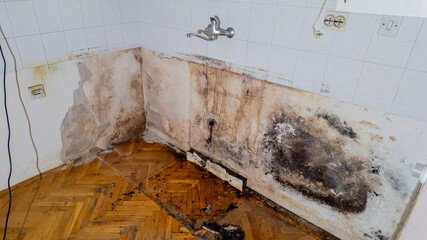
Burst plumbing lines, slab foundation leaks, washing machine overflows, and roof failures demand immediate mechanical intervention to prevent structural rot. We mobilize industrial extraction units to remove standing Category 1, 2, or 3 water from hardwood floors, subfloor assemblies, and crawl spaces within hours of contact.
Our field specialists build calibrated psychrometric drying environments utilizing Low-Grain Refrigerant (LGR) industrial dehumidifiers and directed high-velocity axial air movers. We calculate specific humidity ratios and grain depression every 24 hours, utilizing FLIR thermal imaging and non-invasive moisture meters to ensure structural framing reaches safe equilibrium moisture content under 15% wood moisture equivalent. For regional water emergencies, visit our dedicated California water damage restoration portal.
- Emergency water pump-out and truck-mount liquid extraction
- Infrared thermal boundary leak and moisture mapping
- Deep subfloor, cavity, and concrete slab desiccant drying
- Daily psychrometric logs and moisture monitoring records
Mold Removal San Diego
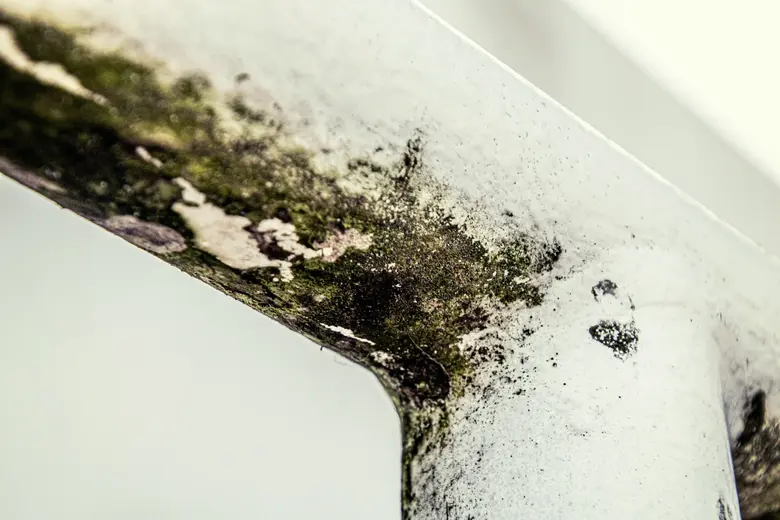
Surface mold spreading across bathroom ceilings, window framing, kitchen cabinetry, and garage drywall indicates an unmanaged moisture threshold. Rather than masking the issue with superficial paint or caustic bleach, our team targets the active fungal root systems using hospital-grade antimicrobial agents that destroy hyphae and surface spore networks.
Non-salvageable porous components such as wet drywall, water-logged cellulose insulation, and contaminated baseboards are meticulously cut out, bagged in 6-mil poly containment bags, and cleanly extracted. Framing members receive intensive HEPA vacuuming and non-toxic surface treatments that neutralize musty microbial volatile organic compounds (mVOCs). Learn more about our comprehensive approach on our main mold removal home page or our regional mold removal hub.
- Targeted surface cleaning with EPA-registered botanical antimicrobials
- Controlled removal and disposal of contaminated porous materials
- Neutralization of musty airborne mVOCs and lingering odors
- Detailed HEPA vacuuming capturing 99.97% of fungal particulates
Mold Remediation San Diego
Remediation represents an engineered building science discipline designed to eliminate indoor microbial contamination and restore healthy indoor air quality. Following strict ANSI/IICRC S520 guidelines, we seal affected work zones using airtight poly sheeting with zippered transition portals and negative-pressure HEPA filtration scrubbers exchanging indoor air 4 to 8 times per hour.
This rigorous engineering control traps free-floating spores of Aspergillus, Penicillium, and Cladosporium before they migrate into HVAC ductwork or adjacent living areas. Once physical contamination is eradicated, exposed framing is protected with antimicrobial polymer encapsulants to permanently inhibit regrowth, guiding properties back to Condition 1 normal fungal ecology. Check our step-by-step methodology on our mold remediation protocol page and our local remediation silo.
- Critical negative-pressure poly containment zones
- Industrial HEPA air scrubbing filtered down to 0.3 microns
- Antifungal timber encapsulation and structural wood sealing
- Documented return to Condition 1 normal fungal ecology
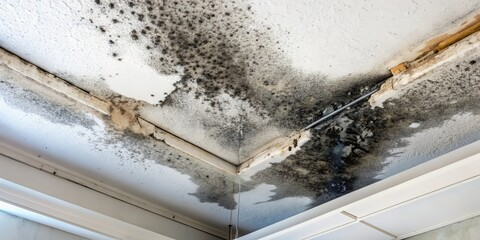
Black Mold Abatement San Diego
Toxic black mold (Stachybotrys chartarum) produces potent trichothecene mycotoxins that present documented health hazards, especially for children, seniors, and asthmatic occupants. Because Stachybotrys requires sustained cellulose saturation to thrive, it commonly festers inside wet wall cavities following plumbing leaks, unvented crawl spaces, or seasonal storm incursions.
Our specialists isolate toxic black mold contamination zones as hazardous environments. Field crews operate under full P100 respirator protection and use negative air machines fitted with differential pressure manometers to prevent cross-contamination into clean spaces. We safely remove contaminated gypsum and treat remaining structural timbers with specialized biocide washes. Read more about handling toxic hazards through our toxic black mold abatement guide and our local black mold service page.
- Rigid bio-containment barriers with sealed airlocks
- Full technician P100 particulate and respiratory protection
- Double-bagged hazardous material removal and transport
- Differential pressure monitoring to protect clean living spaces
Our Proven Four-Step Restoration Process
Disciplined execution aligned with ANSI/IICRC S500 water restoration and ANSI/IICRC S520 microbial remediation guidelines for residential and commercial structures.
Moisture Diagnostics & Thermal Mapping
We identify the root cause of water damage using FLIR infrared cameras, calibrated pinless moisture meters, and optical wall borescopes. We map internal moisture paths across ceiling cavities, subfloors, and concrete slabs without unnecessary exploratory demolition.
Critical Containment & Negative Pressure
Before disturbing building materials or aerosolizing mold spores, technicians erect airtight 6-mil poly containment barriers with zippered decontamination entryways. Negative air machines continuously exhaust scrubbed air outdoors to protect unaffected rooms.
Controlled Demolition & HEPA Filtration
Damaged drywall, saturated insulation, and unsalvageable flooring materials are misted with antimicrobial agents to suppress airborne dust, excised under controlled techniques, and sealed in heavy bags. Bare framing is scrubbed and vacuumed with true HEPA filtration.
Antimicrobial Sealing & Air Clearance
Structural lumber is treated with EPA-registered antifungal encapsulants to halt moisture absorption. We deploy industrial dehumidifiers until framing moisture drops below critical thresholds, and we coordinate independent third-party air clearance testing prior to barrier removal.
Why San Diego Property Owners & Facility Managers Choose Us
Advanced diagnostic technology, objective third-party clearance verification, and transparent insurance-ready documentation for private homeowners and commercial stakeholders.
Advanced Diagnostic Fleet
Our mobile response teams carry high-capacity LGR dehumidifiers, negative air machines, thermal imaging cameras, and rapid extraction equipment ready for immediate countywide deployment.
Zero Conflict of Interest
We strictly separate remediation services from testing. We collaborate with independent environmental hygienists who conduct unbiased pre-remediation mold inspection and laboratory mold testing.
Insurance Claim Support
We compile date-stamped thermal moisture maps, daily psychrometric dry-down charts, and itemized Xactimate-compatible estimates to streamline your California property insurance claim.
Transparent Project Pricing
Standard single-room containment projects typically range between $2,000 and $3,500. We provide written, itemized proposals before performing any structural work. View our complete restoration pricing guide.
San Diego Neighborhoods & Transportation Corridors We Serve Daily
Our mobile response fleet is strategically stationed along San Diego's critical transit arteries—including Interstate 5, Interstate 8, Interstate 15, Interstate 805, State Route 163, State Route 52, and State Route 94. This distributed network enables our field technicians to arrive on site quickly when an emergency plumbing break strikes in Downtown, or when coastal humidity drives a severe mold bloom in Pacific Beach or La Jolla. Whether you manage a retail storefront in Mission Valley or own a single-family home in Chula Vista, our rapid-response teams are equipped to stabilize property damage.
La Jolla, Pacific Beach & Ocean Beach
Specialized remediation for oceanfront residences, beach cottages, and rental properties along Mission Boulevard, Torrey Pines Road, and Sunset Cliffs Boulevard challenged by relentless marine layer moisture and salt air corrosion.
Downtown, Little Italy & Hillcrest
Rapid response for residential lofts, historic condominiums, and mixed-use commercial properties along Broadway, 5th Avenue, and University Avenue encountering aging plumbing pipe bursts and interior drywall mold.
Mission Valley & Clairemont
Dedicated structural water extraction and moisture drying for ground-floor condominiums, commercial centers, and post-war ranch homes along Friars Road, Clairemont Mesa Boulevard, and Balboa Avenue.
Chula Vista, National City & Southcrest
Targeted flood recovery, soil moisture barrier containment, and black mold abatement for residential properties near Chollas Creek, Highland Avenue, and E Street navigating shallow water tables and flash flood risks.
Del Mar, Encinitas, Carlsbad & Oceanside
Comprehensive mold mitigation and structural timber decontamination for coastal properties and hillside estates along Coast Highway 101, El Camino Real, and Palomar Airport Road facing coastal storm condensation.
El Cajon, La Mesa & Santee
Swift emergency response for residential homes and commercial remediation facilities throughout Fletcher Parkway, Cuyamaca Street, and Mission Gorge Road combating slab leaks and high attic humidity.
Frequently Asked Questions: San Diego Mold & Water Restoration
Why does mold flourish along San Diego's coast even without a plumbing leak?
San Diego's coastal belt—including Pacific Beach, Ocean Beach, Point Loma, and La Jolla—regularly endures sustained marine layer inversions where outdoor relative humidity exceeds 75% to 85%. When warm, humid air enters homes with inadequate airflow or meets air-conditioned drywall and window frames, water droplets condense. Without mechanical ventilation or dehumidification, mold spores of Cladosporium and Penicillium activate on cellulose-rich drywall, shoe racks, and wardrobe baseboards without any plumbing rupture.
How much does mold remediation typically cost in San Diego, CA?
Residential remediation across San Diego County typically ranges from $2,000 to $3,500 for standard single-room containment (such as an affected laundry alcove, under-sink cabinet, or master bathroom wall). Small localized repairs under 10 square feet may run from $500 to $1,500. Substantial remediation projects involving extensive slab leak damage, crawl space moisture mitigation, or multi-room containment following storm flooding can range from $6,000 to $10,000+. View our transparent restoration pricing overview for further benchmarks.
What are California habitability rules regarding mold in rental properties?
Under California Health & Safety Code Section 17920.3 and SB 655, visible mold growth that endangers the health of occupants is classified as a substandard housing condition and a breach of the implied warranty of habitability. Property owners and landlords are legally obligated to resolve plumbing leaks and remediate structural microbial infestations promptly using proper engineering containment methods rather than simply painting over active mold colonies.
Why is bleach ineffective for removing black mold on drywall and framing lumber?
Household bleach contains roughly 90% water. While the chlorine component stays on the non-porous exterior and evaporates rapidly, water penetrates deeply into porous drywall gypsum and structural wood studs. This residual moisture feeds the microscopic hyphae (root structures) beneath the surface, prompting the mold colony to regenerate rapidly while off-gassing irritating microbial volatile organic compounds (mVOCs) into your indoor living environment. Professional restoration requires controlled extraction, HEPA vacuuming, and EPA-registered antimicrobial encapsulation.
Will property insurance cover water damage and subsequent mold remediation?
Most standard California homeowner and commercial property insurance policies provide coverage for water damage and resulting microbial growth when the cause is "sudden and accidental"—such as an abrupt water heater rupture, frozen line break, or sudden appliance hose split. Policies typically limit or exclude coverage for gradual, long-neglected seepage or exterior ground flooding. Our team provides comprehensive photographic evidence, infrared documentation, and psychrometric dry-down logs to assist with insurance claim evaluations.
How does Mold Out California serve other regions across the state?
Mold Out California provides comprehensive restoration and microbial mitigation solutions across key metropolitan regions statewide. In addition to our dedicated San Diego hub, we operate regional service locations in Los Angeles and Sacramento, adhering to unified ANSI/IICRC protocols and scientific drying principles across all California properties.
Protect Your San Diego Property from Moisture & Mold Today
Do not let hidden copper slab leaks, stubborn coastal condensation, or hazardous black mold colonies compromise your family's health and building value. Our San Diego County mobile restoration teams are prepared around the clock to extract water, contain contamination, scrub indoor air, and restore structural integrity safely.