Water Damage Restoration
When clean supply lines burst, roofs fail, or drain lines back up, immediate physical water extraction and calibrated dehumidification save properties from catastrophic loss. Mold Out California deploys industrial extraction units, thermal imaging, and psychrometric drying protocols across California homes and commercial facilities to restore building materials to dry baselines before secondary decay takes hold.
What is Water Damage Restoration?
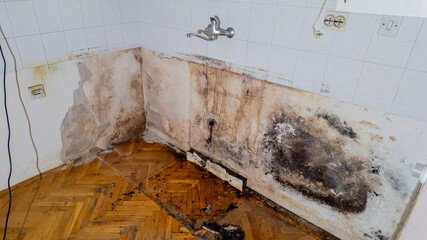
Water damage restoration is an engineering science that extracts free liquid water, tracks bound moisture inside structural framing, and systematically regulates indoor psychrometric conditions to dry saturated assemblies. In residential and commercial buildings, water does not stay confined to the surface. It wicks vertically through porous gypsum wallboard via capillary draw, runs beneath sill plates, pools over concrete slabs, and saturates subfloor plywood. A standard janitorial cleanup or surface vacuuming leaves behind hidden reservoirs that rot load-bearing framing and trigger fungal blooms.
Professional mitigation recognizes two interconnected stages of loss: primary damage and secondary damage. Primary damage happens instantly as wood fibers swell, drywall cores lose cohesion, baseboard adhesives delaminate, and floor coverings dissolve. Secondary damage begins between 24 and 48 hours post-intrusion. Elevated relative humidity and trapped liquid allow airborne microbial spores to activate, creating severe health hazards. Unresolved water intrusion often requires complete structural mold remediation services or physical mold removal to make the building habitable again.
Our field teams understand building thermodynamics. Rather than merely blowing warm air around a damp room, we systematically calculate grain depression, evaluate dew points, and establish dynamic vapor pressure differentials. This technical approach pulls bound water molecules out of dense timbers, protecting the architectural envelope from long-term decay. Explore our complete scope within our comprehensive environmental restoration catalog.
Water Damage Categories & Classes (ANSI/IICRC S500 Standards)
Water Categories (Sanitary Hazard Classification)
Originates from sanitary sources such as broken domestic water supply lines, overflowing washbasins, falling rainwater, or failed refrigerator ice-maker lines. It poses little immediate biological hazard to occupants. However, if Category 1 water remains stagnant inside building cavities for longer than 24 to 48 hours, contact with building dust and temperature rises cause it to degrade rapidly into Category 2.
Carries significant chemical, biological, or physical contaminants capable of causing irritation, discomfort, or illness upon contact. Typical examples include washing machine discharge, dishwasher pump overspills, aquarium punctures, and sump pump failures. Porous contents such as carpet padding and low-density insulation must be removed under controlled protocols.
Grossly unsanitary liquid containing raw human pathogens, heavy bacterial colonies, toxic chemicals, or soil runoff. Sources include sewer mains, river flooding, and standing ground waters. Category 3 situations demand personal protective gear, HEPA environmental scrubbing, and immediate containment to avoid toxic exposures requiring hazardous black mold abatement procedures.
Water Classes (Structural Evaporation Difficulty)
Water intrusion impacts only a small portion of a room, generally less than 5% of combined ceiling, wall, and floor surface areas. Moisture has contacted low-porosity materials like concrete slabs, quarry tiles, or solid wood framing with minimal absorption. Evaporative dehumidification requirements are minimal.
Water affects an entire room, absorbing between 5% and 40% of the aggregate structural surface area. Saturated carpet cushion, carpet fibers, and baseboard wallboard wick water vertically up framing between 12 and 24 inches. Demands high-capacity mechanical air movement to liberate trapped water.
Water typically comes from overhead, saturating more than 40% of ceiling gypsum, insulation bats, perimeter wall framing, and subfloor plywood. Water cascades across multi-level floors, requiring massive air velocity, desiccant extraction, and aggressive structural cavity venting.
Water binds deeply inside low-porosity, high-density assemblies including tongue-and-groove hardwood planks, structural brick, plaster-and-lathe walls, mortar beds, and thick commercial concrete slabs. These substrates require specialized negative-pressure floor mat extraction and prolonged dry vapor pressure differentials.
Our Complete Water Damage Restoration Process
Thermal Mapping
We deploy FLIR infrared cameras and non-penetrating RF capacitance meters to trace moisture boundaries through wall cavities and crawl spaces without puncturing finishes.
Bulk Water Extraction
Heavy-duty truck-mounted vacuum units and weighted commercial extraction plates remove standing surface water, extracting up to 90% of free moisture before evaporation begins.
Selective Demolition
Technicians execute precise flood cuts 12 to 24 inches above moisture lines, pulling soaked fiberglass insulation and unsalvageable carpet pad to expose wet wall studs.
Psychrometric Drying
We deploy commercial Low Grain Refrigerant (LGR) dehumidifiers alongside directional axial air movers to lower ambient vapor pressure and force bound moisture out of structural lumber.
Antimicrobial Wash
Exposed framework, sill plates, and subflooring receive direct applications of EPA-registered botanical antimicrobials to neutralize micro-flora, mold spores, and bacterial contaminants.
Clearance Verification
We log daily moisture content benchmarks using penetrating pin meters until framing returns to equilibrium moisture standards (typically under 12% to 15%), confirming it is safe to rebuild.
Common Water Damage Scenarios We Remediate
Plumbing Failures
Pressurized supply line bursts, pinhole leaks in aging copper lines, failed PEX fittings, and concealed slab leaks saturating floor systems.
Appliance Ruptures
Water heater tank fractures, washing machine braided hose splits, and cracked dishwasher pumps flooding lower levels.
Storm Intrusion
Wind-driven torrential rainfall, broken concrete roofing tiles, failed flashing details, and overloaded gutter systems leaking into attic spaces.
Sewer & Sump Backups
Municipal sewer branch surcharges, basement sump pump electrical cutouts, and toilet backflows discharging Category 3 black water.
Field Equipment & Drying Instrumentation
Infrared Diagnostics
FLIR thermal imagers identify evaporative cooling patterns, exposing wet cavities and insulation behind drywall without destructive cuts.
LGR Dehumidifiers
Commercial Low Grain Refrigerant dehumidifiers pull high water volumes daily, maintaining low relative humidity under demanding ambient conditions.
Axial Air Velocity
High-output commercial fans produce laminar airflow across floors and sill plates to accelerate boundary-layer moisture evaporation.
True HEPA Air Scrubbers
Multi-stage air filtration units continuously process indoor air volumes, capturing 99.97% of airborne dust and spores down to 0.3 microns during tear-out.
Insurance Claim Navigation & Defensible Documentation
Managing an insurance claim after a sudden structural water loss requires accurate, itemized documentation. Insurance adjusters reject unsupported estimates. They require clear psychrometric logs, calibrated moisture readings, thermal imaging records, and standardized line-item scopes before approving structural remediation costs.
Mold Out California documents structural moisture data directly into Xactimate, the industry-standard estimating platform used by major insurance carriers across California. We coordinate directly with your adjuster, providing clear evidence of water categories, structural classes, and drying logs to help secure proper coverage without unnecessary delays. Review our transparent restoration pricing benchmarks for typical room drying and extraction rates.
Why Property Owners Trust Mold Out California
Rapid Mobilization
Our California service vehicles roll out with industrial extraction units to begin drying before mold spores activate.
ANSI/IICRC S500 Standards
Every extraction phase, equipment calculation, and antimicrobial wash adheres strictly to established structural restoration standards.
Defensible Data Logs
We supply documented psychrometric charts proving framing lumber has reached equilibrium moisture standards before rebuild work begins.
Building Science Focus
From initial emergency extraction through complete building science recovery, we protect your property's long-term value.
Related Property Restoration Services
Mold Inspection
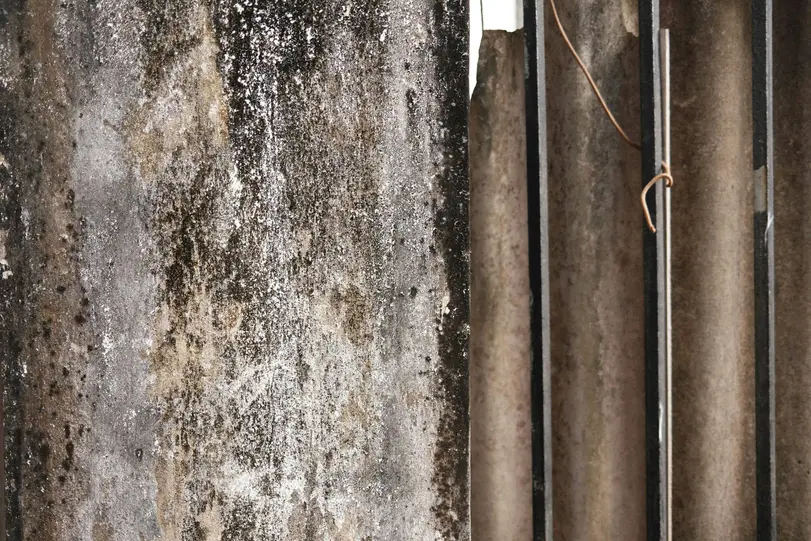
Non-destructive moisture mapping and thermal imaging to locate concealed water paths inside attics, crawl spaces, and wall cavities.
Explore Inspection →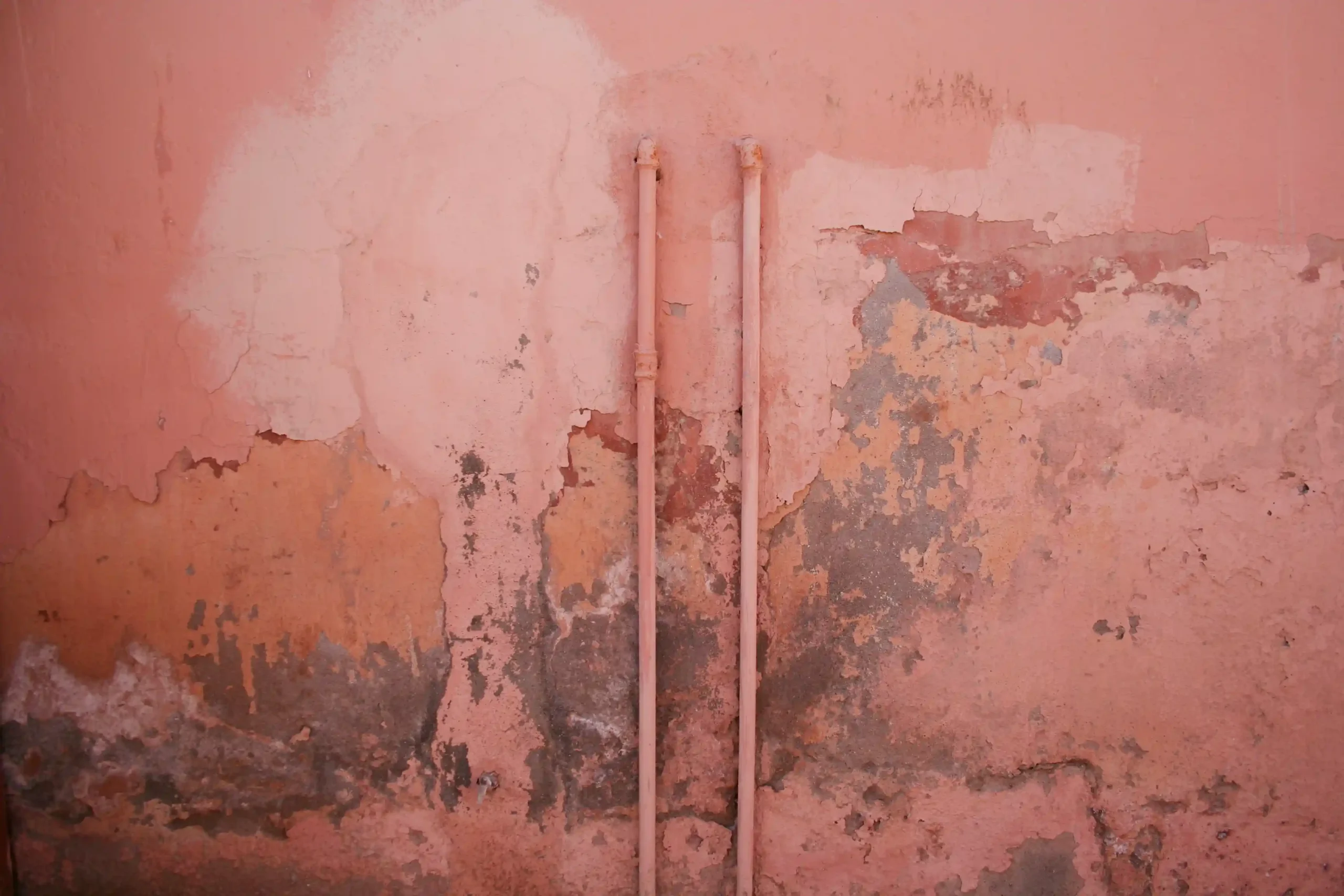
Mold Remediation
Containment barriers, negative air machines, and deep antimicrobial treatments to eliminate fungal root systems permanently.
Explore Remediation →
Mold Testing
Calibrated air sampling and surface swab analysis evaluated through independent accredited microbiology laboratories.
Explore Mold Testing →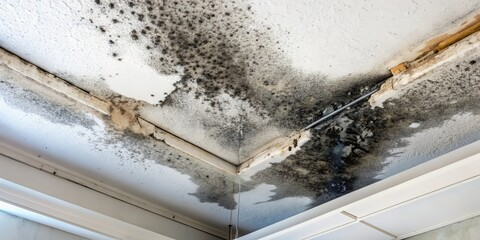
Black Mold Abatement
Regulated hazardous containment protocols to safely extract mycotoxin-producing Stachybotrys chartarum colonies.
Explore Black Mold →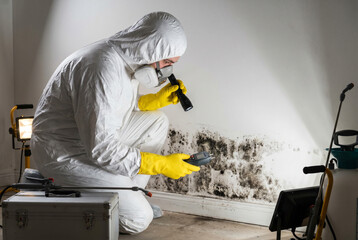
Commercial Remediation
Large-scale environmental recovery for corporate offices, warehouses, educational campuses, and multi-family complexes.
Explore Commercial →
All Restoration Services
Browse our complete catalog of moisture extraction, structural containment, and indoor environmental cleanup solutions.
View All Services →Frequently Asked Questions
How quickly must water damage restoration begin to prevent mold growth?
Water extraction and dehumidification should begin within 24 to 48 hours of liquid contact. Fungal spores naturally exist in indoor air. When porous building materials like drywall, ceiling tiles, or Douglas fir framing remain damp past 48 hours, dormant spores germinate, forming invasive hyphal networks that require extensive structural remediation.
What is the technical difference between water mitigation and water damage restoration?
Water mitigation focuses on immediate damage control: stopping the water source, extracting standing pools, removing saturated carpet pads, and stabilizing relative humidity. Restoration encompasses the entire recovery scope, including structural drying, application of botanical antimicrobials, dehumidification monitoring, and prepping wall studs and subfloors for rebuild.
Can wet drywall, subfloors, and framing lumber dry on their own?
No. In modern energy-efficient buildings, damp structural framing trapped inside closed wall cavities cannot dry on its own. Trapped moisture remains stagnant for weeks, rotting baseboard plates and rotting subfloor glue. Without commercial Low Grain Refrigerant dehumidifiers to lower ambient vapor pressure, moisture causes secondary rot and microbial blooms.
Does California property insurance cover structural drying and water damage mitigation?
Most standard property insurance policies cover sudden and accidental water losses, such as supply line bursts, failed water heater fittings, or appliance pump ruptures. Gradual long-term leaks or deferred maintenance are typically excluded. We log drying logs, thermal scans, and Xactimate line-item estimates directly to your adjuster to facilitate claims processing.
How do restoration technicians confirm that structural framing is completely dry?
We track drying using calibrated resistance pin meters and psychrometric instruments rather than visual inspection. Framing timbers are considered dry when their internal wood moisture equivalent (WME) matches unaffected dry baseline standards (typically between 10% and 14%). Equipment runs continuously until these objective measurements are confirmed.
What is psychrometric drying and why is it critical for water damage?
Psychrometrics is the thermodynamic science of atmospheric moisture. Our technicians evaluate temperature, relative humidity, dew points, and grains per pound (GPP) of air moisture. By maintaining an aggressive vapor pressure differential between wet framing and room air, dehumidifiers actively draw deep moisture out of structural timbers.
Halt Water Intrusion Before Structural Decay Begins
Contact our California team for on-site diagnostic moisture mapping, bulk liquid extraction, and structural dehumidification.